Convert Opus to MP4 online with a waveform, cover image, or simple visualizer
People often search for an Opus to MP4 converter online because the source audio works well in modern web workflows but needs a more universal delivery format. Opus is common in browser recordings, voice apps, and web audio pipelines, while MP4 is easier to preview, publish, and share across a wider set of platforms. This page gives you a direct route from Opus audio to a clean downloadable video.
A practical convert Opus to MP4 workflow should stay lightweight. Upload the source file, choose the visual wrapper, and export the result without opening a full editor. That is often enough for lesson clips, demos, voice content, podcast snippets, browser-captured audio, and internal review copies.
- Turn Opus audio into a shareable MP4 for review, publishing, and playback
- Use cover art or a waveform for lessons, voice clips, and quick demos
- Keep modern source audio local with private browser processing

How to turn Opus into MP4 for YouTube, demos, and wider compatibility
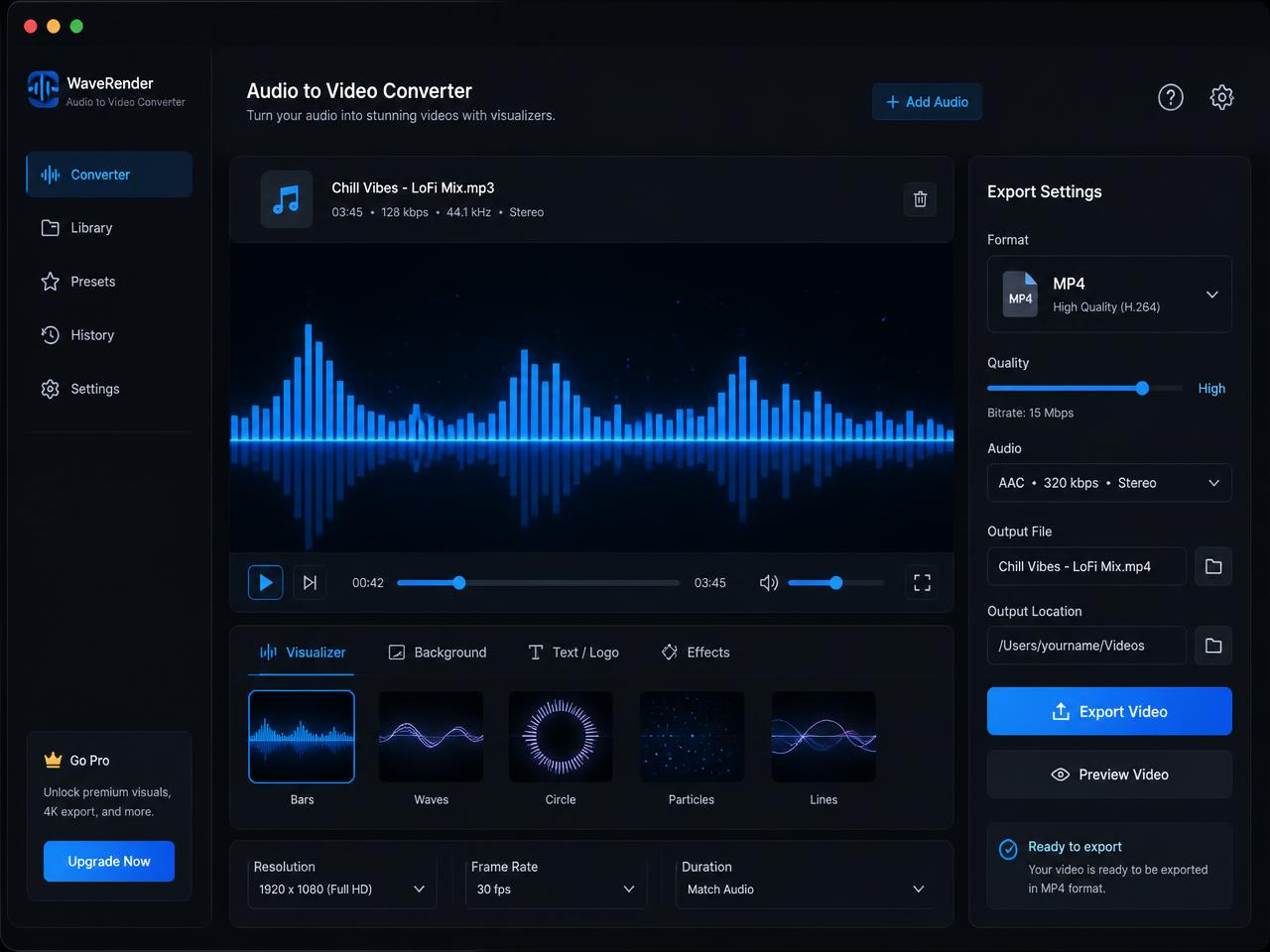
Start by choosing the Opus file you want to package as video. That could be a browser audio export, a voice recording, a lesson clip, a podcast snippet, or another modern web audio file that needs wider compatibility. The page reads the file locally in the browser, so the workflow can begin without waiting on a remote upload queue.
Next, choose the visual wrapper that fits the destination. A waveform is useful when you want visible motion, a static poster is a good fit when branding or reference art matters, and the spectrum mode works well for stylized previews. The point is to make the Opus file easier to share in a format more platforms understand, not to turn the task into a full editing project.
Once the render finishes, download the MP4 and send it where it needs to go. This is a useful path for people looking for an Opus to MP4 converter for YouTube with no watermark or a quick way to package modern compressed audio for broader playback and review.
Best Opus to MP4 use cases for voice, lessons, web audio, and review workflows
Opus often appears in browser-first and modern communication workflows, which makes a focused Opus file to MP4 converter useful. It bridges the gap between a web-friendly source format and the MP4 container that more publishing and review tools can open instantly.
Convert Opus voice clips into video for easier sharing
Voice messages, lessons, and short recordings often travel more smoothly as MP4 when the audience is spread across browsers, chat tools, and content platforms.
Turn Opus lesson and web audio into video for broader playback
Training systems, teaching portals, and lightweight publishing workflows often handle video more consistently than raw audio files. A poster image or waveform helps the file fit those systems.
Make Opus review copies that open consistently across tools
A quick MP4 wrapper reduces codec and preview friction when collaborators need a universal file for feedback and approval.
What makes this browser Opus to MP4 converter useful in real delivery workflows
The value of a dedicated Opus page is focus. You already have the source audio, and the next step is simply packaging it as a clean MP4 with a visual wrapper, no watermark, and no unnecessary editing overhead. That is what this page is built to do.
Browser-side processing is especially helpful when the audio is private, unfinished, or part of a client workflow. The source stays on your device, which makes the process easier to trust and easier to start.
Longer recordings still take longer because rendering happens in real time. Desktop browsers are the best fit for heavier exports. If an Opus file refuses to decode, re-exporting it to a standard Opus setting or converting it to WAV or M4A usually resolves the issue.
After export, rename the MP4 with the project, version, and destination so review copies and upload files stay easy to track across shared folders and publishing tools.