Convert audio to video online with cover art, a waveform, or a clean music visualizer
People looking for a free online audio to video converter usually need one practical thing: turn an audio file into a shareable MP4 without opening a timeline editor. This page keeps the workflow simple. Drop in your audio, pick a visual mode, and export a finished video that works on platforms that refuse plain audio uploads.
A good make video from audio tool should keep the sound intact, give the viewer a clear visual anchor, and stay fast enough for day-to-day publishing. That is why the built-in modes focus on the styles users actually search for: a waveform video, a static cover art video, or a spectrum animation that adds motion for music and spoken-word content.
- Turn MP3, WAV, M4A, AAC, OGG, and FLAC into a download-ready MP4
- Add a cover image for songs, audiobooks, sermons, lessons, and podcasts
- Create a private browser-based video without sending the source file away

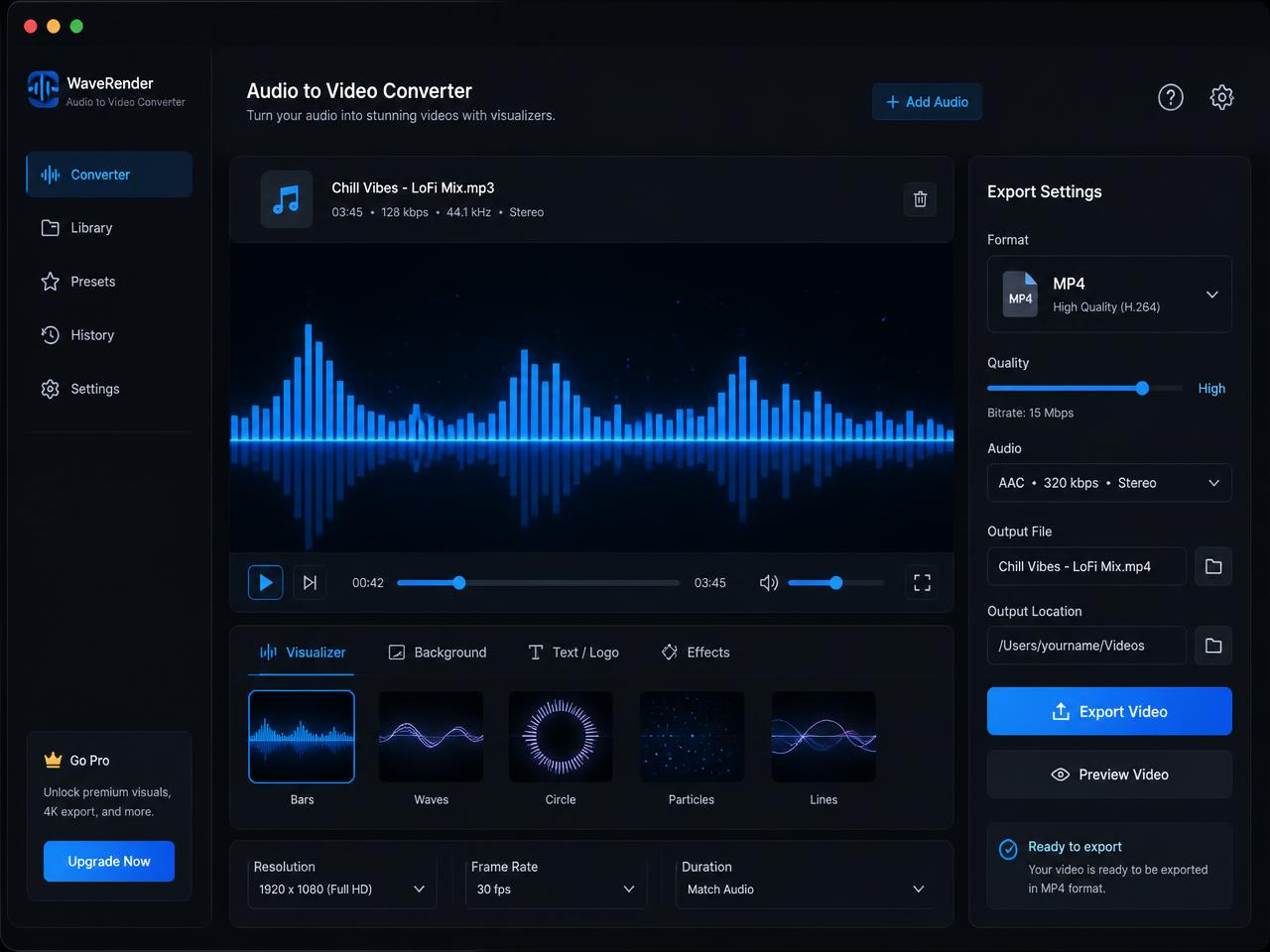
How to turn audio into video for YouTube, TikTok, Instagram, and podcast publishing
First, select the audio you want to publish. You can drag in a song, podcast clip, voice memo, interview, audiobook chapter, or lesson recording. Because the decoder runs in the browser, processing starts as soon as the tab reads the file instead of waiting for a server upload queue.
Next, choose the visual style that fits the use case. A waveform video is often the best choice for podcasts and talking content because it shows movement clearly. A poster image works well for music tracks and long-form recordings where the cover art carries the identity. A spectrum visualizer is a useful middle ground when you want more motion without turning the page into a full editor.
Finally, export the MP4 and upload it where you need it. This is a practical route for anyone searching for an audio to video converter for YouTube with no watermark or a quick way to make audio acceptable to video-first platforms.
Best use cases for a free audio to video converter with no watermark
Video platforms dominate distribution, but a huge amount of useful media still starts as audio. A focused audio file to video converter bridges that gap quickly, especially when you do not need timelines, multi-track editing, or a heavy desktop export workflow.
Turn podcast audio into video with a waveform for social clips
Podcast episodes and short excerpts perform better when they carry visible motion. A waveform-based MP4 gives you a clean video asset for YouTube, Shorts, Reels, and internal content libraries.
Make a music video from MP3 with album cover art
Artists and labels often need a straightforward music upload that keeps the focus on the track and artwork. A static poster export is a fast way to publish songs, demos, and instrumental versions as MP4.
Convert voice recordings to MP4 for lessons, training, or client delivery
Voiceovers, lectures, worship recordings, onboarding audio, and internal explainers are easier to distribute as MP4 because video players are universal across browsers, LMS platforms, and team tools.
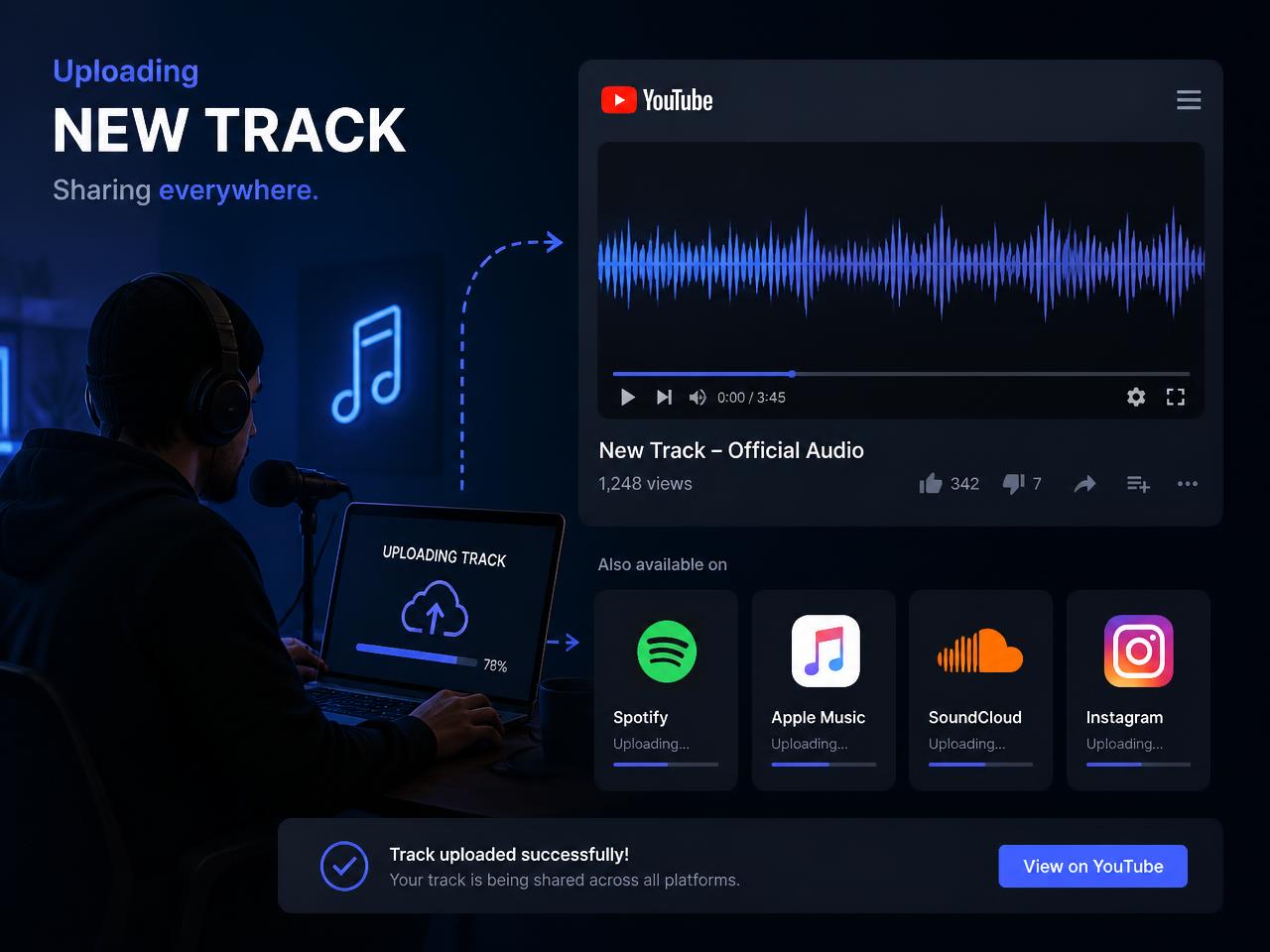
What makes this browser audio to video converter useful for real publishing work
A lot of competing pages emphasize scale, AI features, or giant format lists. For this tool page, the more useful promise is simpler: let someone make a clean MP4 from audio quickly, privately, and without adding a watermark. That matches what creators usually want when they search for an online audio to video converter for podcasts, songs, or voice recordings.
Browser-side processing is especially helpful when the source audio is sensitive, such as unreleased music, client interviews, classroom recordings, or internal announcements. The page works directly with the local file, so there is less waiting and less concern about sending source material to a remote service.
Practical expectations stay the same as the homepage converter. Rendering happens in real time, so longer files take longer to finish. Desktop browsers are the best fit for long exports, while shorter clips are more comfortable on mobile. If a file refuses to decode, re-exporting it to a standard 44.1 kHz MP3 or WAV usually resolves the issue.
After download, rename the MP4 with the episode name, song title, or topic keyword you plan to publish around. Consistent filenames, thumbnails, and on-page metadata help the asset stay organized once it moves into YouTube, social schedulers, or client handoff folders.